%20by%20Saledock.jpg?width=1400&height=700&name=Say%20hello%20to%20Customer%20Engagement%20Suite%20(CES)%20by%20Saledock.jpg)
Marketing

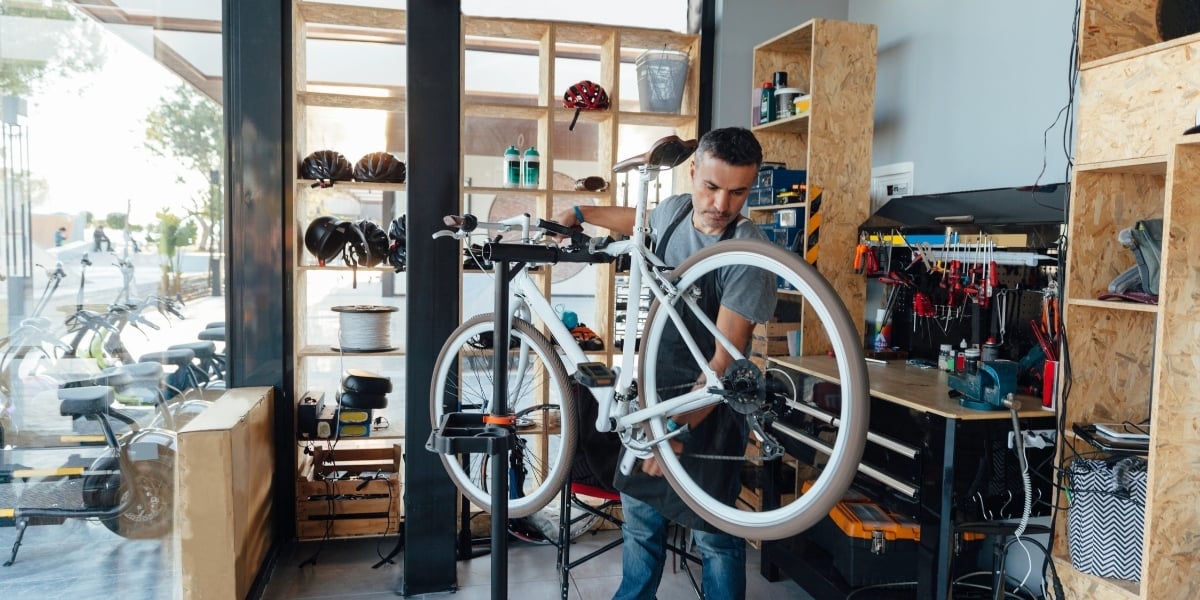
A workshop is a continuous source of income for most bike retailers, generating revenue from repairs, replacement parts, and servicing. However, increasing workshop revenue isn’t limited to taking on more repair jobs.
Bike shops can increase the value of every workshop visit by offering additional services and encouraging customers to return for regular servicing. Interested in making more money from your existing workshop?
Here are five ways bike shops can increase workshop revenue:
Instead of relying solely on individual repairs, retailers can offer service packages. This gives customers more options while increasing the value of each workshop visit.
For example, a bike shop can offer three servicing packages: basic, standard, and premium. These packages may cover different levels of inspection, repair, and maintenance. Customers can then select the package based on their riding frequency, budget, and bike’s condition.
Technicians may identify additional work during a scheduled inspection, such as brake pads, chains, or drivetrain components that need replacement. Recommending this work while the bike is already undergoing regular maintenance can help customers avoid future problems.
The key is to make recommendations based on the bike’s condition, explaining what and why it needs attention to help customers make informed decisions about necessary work in time.
A workshop doesn't have to depend only on labour work to generate revenue. Every repair job can create an opportunity to sell the parts and other relevant products needed to finish the work.
For example, if a bike has worn-out tyres, it may also require new inner tubes, while a drivetrain service may involve replacing the chain or cassette. A technician may also suggest relevant accessories such as lights, maintenance products, and locks to fulfill the customer’s requirements.
The recommendations should be more relevant than purely promotional and should be based on customer needs. This also makes it important for staff to know whether a required component is available in inventory. Otherwise, a lack of stock visibility can lead to delayed repairs and lost sales opportunities.
Accurate inventory and visibility across the business help staff locate the right parts quickly and use them during the repair process. This helps to deliver a seamless customer experience and generate more revenue from each workshop job.
A customer who visits your workshop can turn into a repeat buyer by offering:
Shops can recommend a few maintenance tips in advance instead of waiting for the customers to return only when something goes wrong.
For example, after completing a regular service, technicians can record the date of bike servicing and consider the customer’s usage when recommending the next inspection. The shop can then send regular follow-ups when the next service is due to create a more personalised customer experience.
Over time, this can increase the workshop’s repeat visits, creating more long-term value for the business than depending on one-off repair jobs.
Another way to increase workshop revenue is to use your resources smartly. Instead of spending considerable time on administrative tasks, including updating customer details, creating repair orders, checking parts availability and processing payments, you can streamline these activities through a connected workflow to minimise duplicate data entry and make it easier to track jobs and payments.
Doing so helps free up more time for your staff to serve customers and work on additional repair/servicing jobs. For example, when all the customer details, parts, and payment information are centralised in one system, staff don’t need to repeatedly enter the same information across different systems. This, in turn, makes tracking a job easier.
The objective isn't just to work on extra jobs but also to reduce the unnecessary friction that the staff face to make better use of their available time. Modest efficiency improvements like these have the potential to create additional capacity without requiring more staff.
When a bike business grows, so does its workshop. That's because the customers may purchase bikes and accessories in-store and return to the workshop for regular servicing and repairs. This means that workshop jobs consume inventory, while creating recurring revenue opportunities.
When customer data, inventory, and sales transactions aren't centralised, staff may have to update information across different systems, leading to increased administrative work that is time-consuming and prone to errors.
A unified retail system such as Saledock helps connect these operations through its POS, eCommerce, inventory, and customer management capabilities. By bringing these functions together in one system, retailers can process transactions more efficiently, check parts availability, and maintain customer information across different interactions.
This connected approach also provides staff with greater visibility across the business, helping them make informed decisions about stock, services, and customer engagement. This also reduces operational headaches while laying a strong foundation for managing workshop and retail activities in parallel.
Related: Why do bike shops need workshop management software
The growing commercial potential of bike workshops is also reflected in the experiences of retailers themselves. According to Cycling Industry News, 43% of bike shops in the UK have experienced a 10%-25% increase in workshop revenue. This demonstrates how workshops can play an important part in a bike shop’s growth if treated as a core part of the business. Workshops can generate additional revenue through servicing, selling relevant parts, and repeat visits for scheduled maintenance and repairs.
Cyclopaedia, a UK bike retailer, is a real-world case study of a well-managed workshop that invested in Celerant ONE by Saledock to streamline its workshop operations through a seamless integration with Bikebook. This demonstrates how connecting workshop operations with the wider retail business can help make the workshop an integral part of the customer and revenue journey, rather than simply a service that supports bike sales.
For shop owners interested in connecting their workshops to wider business revenue, a connected workshop management solution can provide the foundation needed for more efficient operations and sustainable workshop growth.
Want to see how it all works?
Book a no-obligation demo with our team today!
Bike shops can increase workshop revenue by providing service packages, recommending relevant repairs and replacement parts, and encouraging regular servicing. They can further improve workshop efficiency by reducing administrative work and making better use of existing workshop capacity.
In addition to standard repairs and servicing, shops can offer drivetrain maintenance, brake and tyre replacement, safety checks, e-bike diagnostics, and seasonal servicing. Tiered service packages can also increase the value of each workshop visit and bring in repeat business.
Bike shops can encourage repeat visits through service records, scheduling future maintenance, and following up when another service is due. A seamless customer experience and clear maintenance advice can help turn one-off repair customers into regular workshop customers.
Absolutely. A unified retail system connects POS, inventory, eCommerce, and customer data in one system. This centralises workflows, reducing administrative work, improving stock visibility, and making it easier for retailers to manage workshop operations alongside other business activities.