Executive Summary
VAT exemption, inventory investment, and servicing administration are three areas many mobility retailers have traditionally “managed around.” Individually, they seem manageable. Together, they represent some of the greatest hidden risks in the sector.
This blog explains why informal processes are no longer enough, how uncertainty quietly builds behind the scenes, and why retailers are moving toward clearer, more consistent approaches that prioritise confidence over efficiency.
The message is not urgency - it’s preparation.
Introduction
Mobility retail has always required care, expertise, and trust. What’s changed is the level of operational responsibility placed on store owners and directors.
Three areas in particular continue to surface in conversations with mobility retailers across the UK:
- VAT Exemption: From Necessary Paperwork to Process Risk
- Inventory Risk: When Stock Quietly Becomes a Problem
- Servicing: Essential, Valuable - and Often Under-Supported
Individually, each is manageable. Collectively, they represent some of the biggest hidden risks in the sector.
VAT Exemption: From Necessary Paperwork to Process Risk
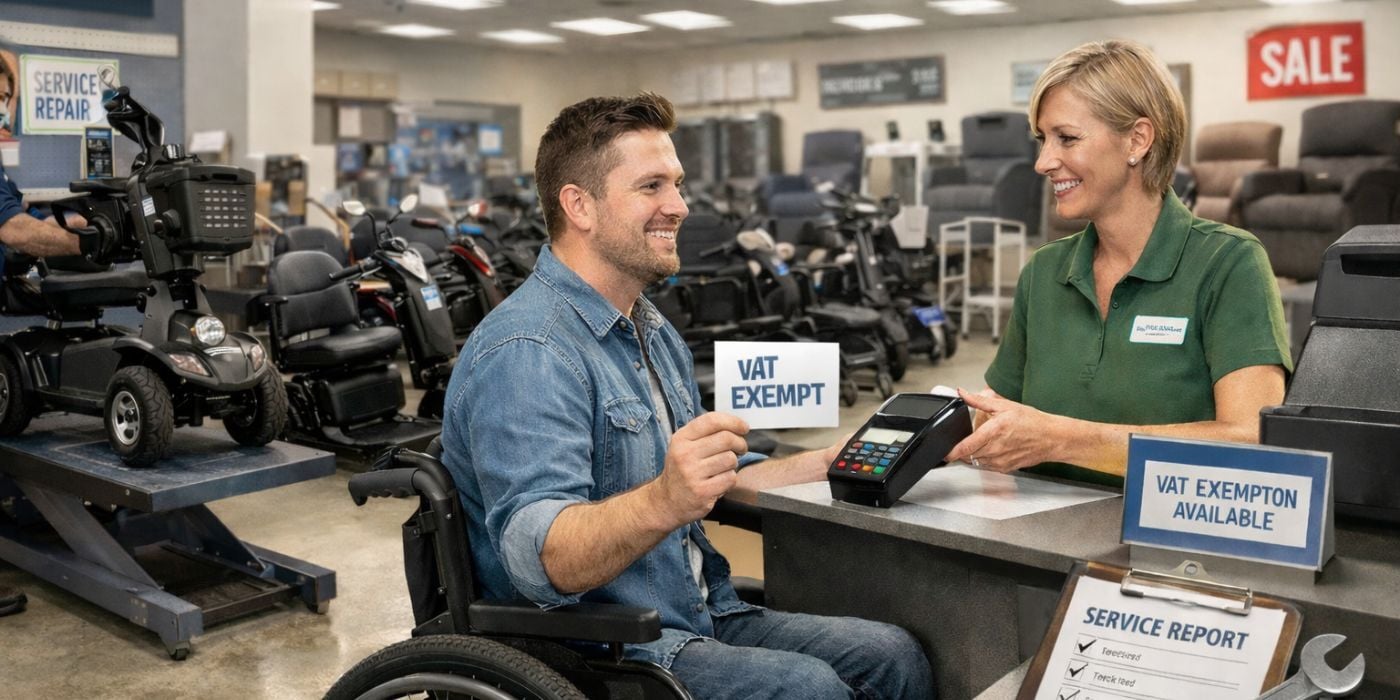
VAT exemption is not optional in mobility retail - but the way it’s handled varies widely. In many stores, the process has evolved organically: printed forms, handwritten signatures, manual filing. It works - until it doesn’t.
The challenge isn’t usually incorrect exemption. It’s inconsistency and uncertainty. Can you quickly retrieve declarations if needed? Are they attached to the correct sales records? Is the process followed the same way on a busy Saturday as it is midweek?
Retailers who have modernised this process have removed stress they didn’t realise they were carrying. Digital confirmation, customer signatures captured at the point of sale, and declarations stored automatically against each order create clarity.
Audits become less intimidating. Staff confidence improves. The process becomes routine rather than risky.
Inventory Risk: When Stock Quietly Becomes a Problem
Inventory is one of the largest financial commitments in a mobility retail business - yet it’s often the least visible risk.
Slow-moving stock doesn’t announce itself. It sits quietly. Capital becomes tied up. Purchasing decisions become harder.
Most retailers rely on experience and intuition, and rightly so. But without clear insight into trends, turnover rates, and seasonal demand, even experienced judgement can be undermined.
Retailers gaining better visibility into stock movement aren’t making radical changes. They’re making small, informed adjustments that add up: better timing, fewer over-orders, more confident promotions.
Over time, this leads to stronger cash flow and fewer surprises.
Servicing: Essential, Valuable - and Often Under-Supported
Increasingly, retailers are recognising mobility scooter servicing as a strategic revenue stream, rather than simply an obligation tied to the original sale. Servicing plays a vital role in customer trust and long-term relationships. Customers return to stores that look after them beyond the initial sale.
The challenge is administration.
When servicing records, invoicing, customer history, and stock usage live in separate places, servicing becomes harder to manage than it should be. This often leads retailers to limit or under-invest in an area that could otherwise be a strength.
Integrated servicing tools change this dynamic. When servicing fits naturally into retail systems, it becomes easier to schedule, track, and monetise - without additional admin overhead.
Why “Just Managing” Isn’t Enough Anymore
For many years, mobility retailers have succeeded by adapting as they go. That adaptability remains a strength - but the environment has changed.
Regulatory scrutiny is higher. Customer expectations are broader. Stock investment is larger. Businesses are more complex.
These pressures don’t exist in isolation - they are part of the wider operational complexity facing mobility retailers as businesses grow, regulations tighten, and expectations increase.
The retailers responding best are not chasing technology for its own sake. They are seeking confidence - confidence that processes are consistent, information is reliable, and risks are understood.
Often, the most valuable outcome of improving systems isn’t efficiency. It’s peace of mind.
Final Thought
Most mobility retailers don’t make changes because something has gone wrong. They do it because they want to ensure nothing does.
Understanding options early, before pressure builds, is increasingly the mark of well-run businesses in the sector. The conversation doesn’t have to start with change - just clarity.
Looking for greater confidence behind the scenes?
Most mobility retailers don’t review systems because something has gone wrong - they do it to reduce future risk.
If VAT exemption handling, stock investment, or servicing admin are areas you’d like more clarity on, we’re happy to talk through how others are approaching this.
(Often useful even if change is months away)
Not quite ready to chat? Explore our practical guide on what mobility retailer should expect from their retail platform, covering VAT exemption, stock investment, servicing, and operational confidence.
FAQs: Common mobility retail questions