Executive Summary
Servicing has evolved from a customer obligation into one of the most strategic opportunities in mobility retail. When managed correctly, it creates predictable revenue, strengthens customer relationships, and increases lifetime value.
This blog examines why servicing often underperforms, how leading retailers are structuring it differently, and why integration - rather than more effort - is the key to making servicing both profitable and manageable.
The conclusion is clear: servicing is no longer optional, but it must be done well.
Why Servicing Is No Longer Just Aftercare in Mobility Retail
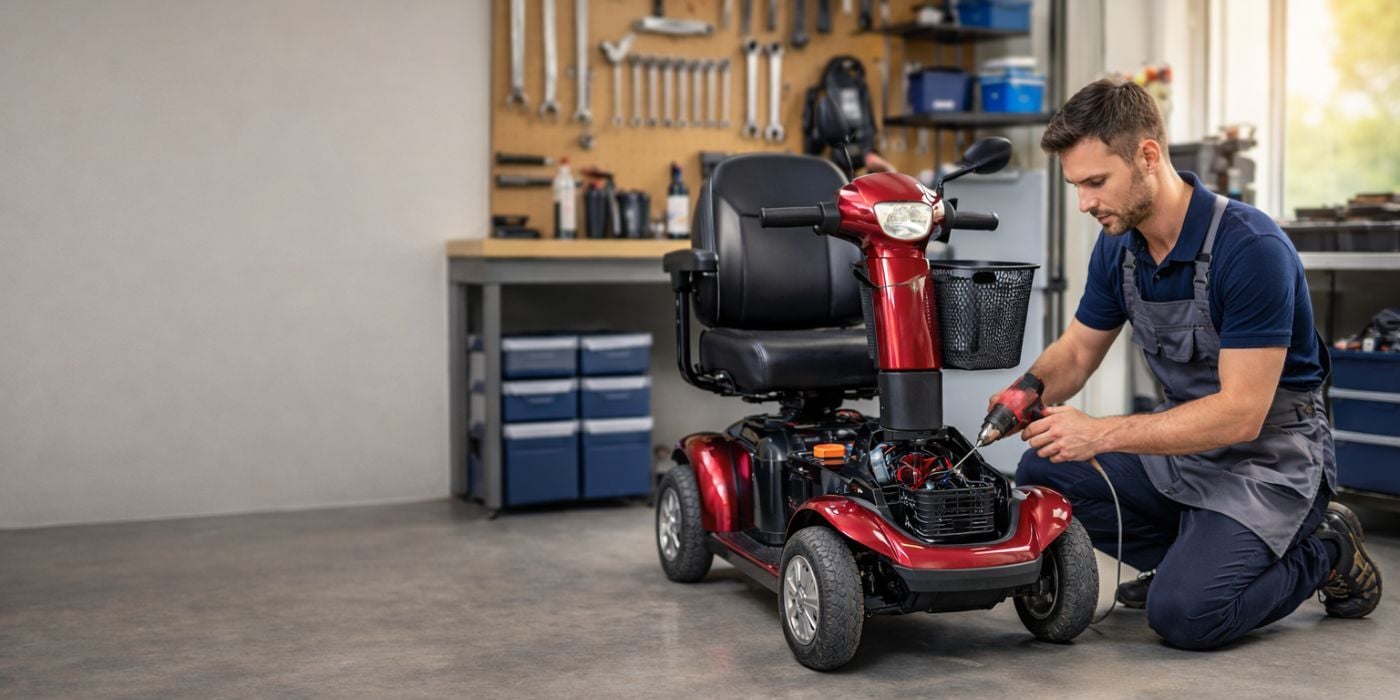
Today, mobility scooter servicing is increasingly recognised as one of the most reliable and strategic revenue streams available to mobility retailers, particularly when viewed in the context of the broader operational challenges facing mobility retailers.
For many mobility retailers, servicing began as an obligation - something customers expected, but which didn’t always receive the same attention as retail sales.
That perception is changing.
Today, mobility scooter servicing is increasingly recognised as one of the most reliable and strategic revenue streams available to mobility retailers - not just for income, but for long-term customer relationships.
The retailers seeing the most benefit aren’t necessarily servicing more scooters. They’re servicing more deliberately.
How Servicing Drives Repeat Visits and Long-Term Customer Value
Customers purchasing mobility equipment are rarely making one-off purchases. They are investing in independence, reliability, and ongoing support.
Servicing plays a critical role in reinforcing trust. When customers know their retailer can support them long after the sale, they are far more likely to return - and to recommend the store to others.
For retailers, this creates a powerful dynamic:
- Repeat visits
- Ongoing relationships
- Predictable, non-seasonal income
Yet despite its importance, servicing is still underdeveloped in many businesses.
Why Many Mobility Retailers Struggle to Make Servicing Profitable
In many businesses, servicing becomes harder to manage when it competes with other priorities such as VAT exemption, stock risk, and servicing pressures, all of which place demands on time and resources behind the scenes.
Many retailers struggle with:
- Manual booking and job tracking
- Disconnected customer records
- Invoicing handled separately from retail sales
- Poor visibility of servicing profitability
When servicing feels disorganised, it becomes something to manage around rather than invest in.
This leads some retailers to limit servicing, outsource it, or treat it as a loss leader - missing a valuable opportunity.
What Successful Mobility Retailers Do Differently with Servicing
Retailers who have turned servicing into a strength tend to share three characteristics:
Servicing Is Integrated, Not Separate
Servicing works best when it’s treated as an extension of retail - sharing customer records, stock usage, and payments.
When servicing systems integrate with retail systems, admin reduces dramatically. Staff spend less time chasing paperwork and more time delivering service.
Processes Are Consistent and Visible
Successful servicing operations have clear workflows:
- Bookings are tracked
- Jobs are visible
- Invoices are consistent
- Customer history is accessible
This doesn’t require complexity - it requires structure.
Servicing Is Viewed as Relationship Capital
Retailers who value servicing don’t measure it purely on immediate profit. They recognise its role in:
- Increasing lifetime customer value
- Encouraging repeat visits
- Supporting future sales and upgrades
Servicing becomes a reason customers return - not just when something breaks, but as part of ongoing care.
The Role of Integrated Systems in Scaling Servicing Revenue
Retailers who succeed with servicing typically rely on integrated mobility scooter servicing tools that connect workshop workflows with customer records, payments, and retail operations.
Integrated workshop platforms allow retailers to:
- Manage bookings and workflows
- Track servicing history
- Invoice accurately
- Reduce manual admin
When connected to retail systems, servicing becomes simpler, clearer, and more profitable - without adding overhead.
Servicing as a Strategic Advantage, Not an Obligation
As the mobility sector evolves, competition increases and customers become more informed. Products alone are no longer enough to differentiate.
Servicing offers something harder to replicate:
- Trust
- Continuity
- Long-term support
Retailers who invest in servicing are investing in stability.
Final Thought
The question for many mobility retailers is no longer whether to offer servicing — but how to do it well.
Those who treat servicing as a strategic part of the business, rather than an obligation, are building stronger relationships and more resilient revenue.
Often, the first step is simply understanding how servicing could work more effectively within existing operations.
Exploring servicing as a growth opportunity?
For retailers who are thinking ahead rather than reacting to a problem, we’ve also put together a practical guide on what mobility retailer should expect from their retail platform, covering servicing, stock investment, VAT-exempt sales, and operational confidence.
If you’re considering how servicing fits into your wider retail model - or how it could be managed more effectively - we’d be happy to share what’s working for other mobility retailers.
(Focused on servicing workflows, not sales demos)
FAQs: Common Mobility Retail Questions