
Digital Marketing
Loyalty Rewards
eCommerce
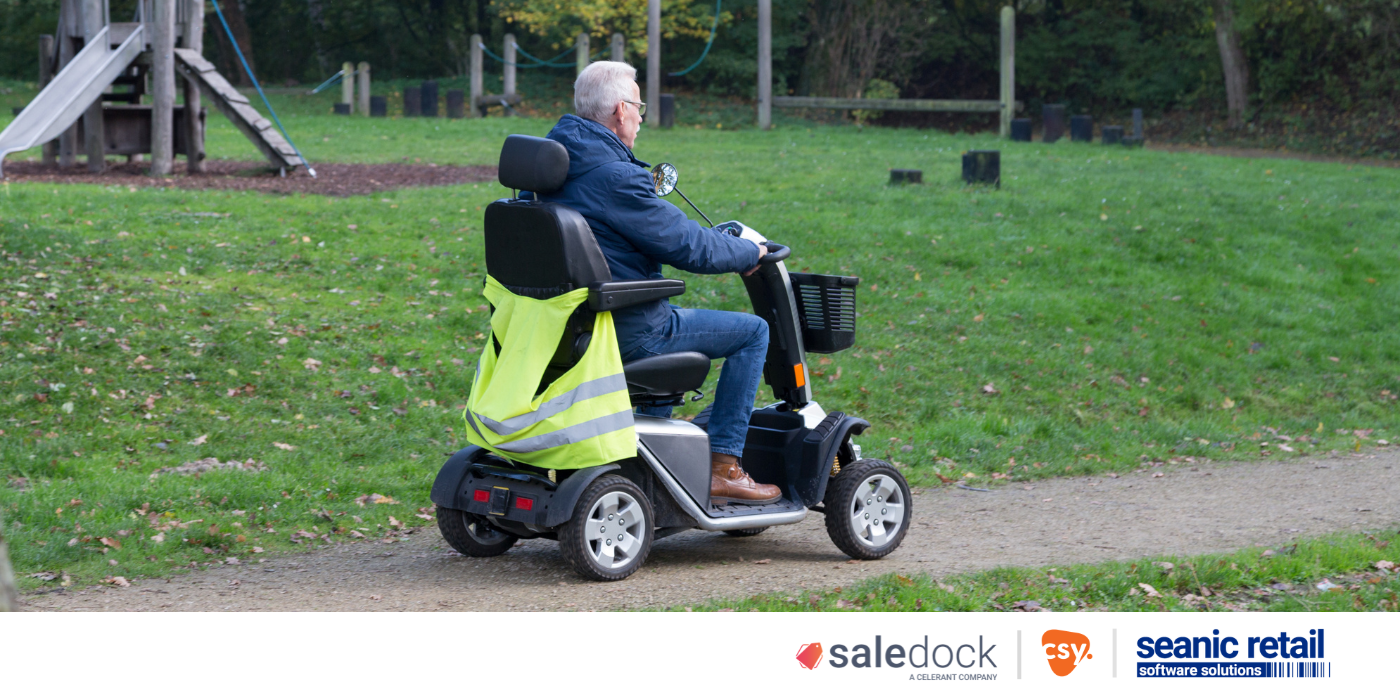

That’s where mobility retail systems come into their own. For many UK mobility stores, they sit at the centre of daily operations, helping teams manage everything from sales and inventory to customer records and aftercare.
It’s also a sector that continues to grow at a pace. The UK mobility devices market is expected to reach around £708.96 million in annual sales by 2026, with projections suggesting it could grow to approximately £1.35 billion by 2035. As demand increases, so does the pressure on retailers to run efficient, well-organised operations.
Which is why having the right system in place is a key part of delivering a smooth in-store experience, staying compliant, and supporting customers properly over time.
So, what should you actually be looking for in a mobility retail system, and which options are worth considering for UK stores? Let’s take a closer look.
Selecting the right mobility POS system depends on how perfectly it synchronises with the industry’s realities, alongside the four most important factors outlined below:
This is one of the most critical aspects of mobility retail in the UK, as eligible customers -typically individuals with certain disabilities -can receive VAT exemptions. This helps them to purchase certain products without paying for the VAT, in line with the rules set by HM Revenue and Customs.
Generic ePOS solutions don't have the built-in features to manage VAT exemptions. But the mobility-focused retail solutions not only apply VAT exemptions correctly but also record digital declarations, including customer electronic signatures and disability proof, at the point of sale, ensuring every VAT-exempt sale processed is compliant and audit-ready.
Mobility retail doesn’t end at the point of purchase. Many products require ongoing servicing, repairs, and general upkeep, which makes workshop management a key part of the operation.
A suitable system should make it easy to keep track of maintenance history, schedule repairs, and send reminders when servicing is due. Without this, it’s easy for things to slip through the cracks. With it, you’re able to offer a more reliable and consistent aftercare experience, which is often what keeps customers coming back.
Mobility products are expensive and slow-selling, making effective stock control essential for retailers. This requires real-time visibility, detailed product tracking, and projection tools to eliminate the risk of overstocking and lost sales opportunities.
Customer lifecycle management is also important. Mobility retail POS Systems that offer detailed customer insights, such as customer history, buying preferences and specific needs, combined with personalised engagement including product recommendations and follow-ups, significantly improve customer retention. By aligning inventory with customer demand, retailers can ensure the right products are available when needed while delivering a tailored, supportive customer buying journey.
Omnichannel capabilities are important due to the ever-changing retail landscape. Customers love flexibility - when browsing online, purchasing in-store, or via an eCommerce store. A system that covers all these touchpoints ensures a smooth and stable customer experience. In short, well-trained staff, a user-friendly interface, and omnichannel features together create a perfect mobility POS system that supports long-term business success.
Once you’ve got a clear idea of what to look for, the next step is understanding which systems are actually delivering on those requirements in the UK market.
There are a number of options out there, but a few names come up consistently when it comes to mobility retail. Not just for their core features, but for how well they align with the practical needs of running a mobility store day to day.
CSY Retail Systems, Seanic Retail Software, and Saledock are often considered among the more established options in this space. Each takes a slightly different approach, whether that’s focusing on simplicity, cost-effectiveness, or offering a more connected retail setup.
Let’s take a closer look at how each one works in practice.
CSY Retail Systems is renowned for catering to the unique needs of the mobility retail sector. It doesn’t offer a generic ePOS solution; it is customised for mobility stores.
Main Features:
CSY Retail Systems stands out in the mobility retail sector for its features and flexibility, enabling it to operate more like an integrated business application than a standalone software solution.
Seanic Retail Software takes a more straightforward and cost-conscious approach. As a cloud-based system, it focuses on covering the essentials without adding too much complexity, which can suit smaller operations or those looking to keep things simple.
Main Features:
Seanic offers a healthy balance for retailers interested in mobility-specific tools, without the additional cost and complexity of enterprise systems.
Saledock takes a broader approach by bringing multiple parts of the business together into one connected system. Rather than focusing purely on point of sale, it links sales, customer management, stock control, compliance, and servicing into a single workflow.
Main Features:
Each of these systems covers the core areas of mobility retail, but they differ in how deeply they handle certain features. Looking at them side by side can make it easier to see which one aligns best with your way of working.
Here is a simplified comparison across some of the areas that tend to matter most to mobility retailers:
| Feature/System | CSY Retail Systems | Seanic Retail Software | Saledock |
| Mobility-centric features | Average to advanced | Average | Advanced |
| VAT exemption handling | Structured workflow with digital signatures and record keeping | Basic to mid-level handling with some manual input | Fully integrated into the sales process with digital capture and compliance support |
| Servicing and workshop integration | Basic to limited | Mid-level servicing | Fully integrated with sales, customer records, and stock |
| Stock control | Mid to advanced, including ordering and multi-store support | Mid-level tracking and control | Real-time visibility across products, locations, and channels. |
| Omnichannel (online platforms and in-store combined) | Mid-level with eCommerce integration and multi-store connectivity | Basic to mid-level omnichannel support with limited and add-on integrations | Fully integrated across in-store and online with real-time sync |
| Best for | Independent retailers and smaller chains | Small to mid-size stores | Independent, growing, and multi-store retailers |
Connect with our team to see what a more connected retail system can look like for your store.