At some point, every growing retailer hits the same wall. What once felt like a manageable product catalogue slowly turns into thousands of SKUs spread across shelves, storage rooms, online listings and marketplaces.
Suddenly, stock counts are harder to trust, reordering becomes messy, and a single mistake can ripple across every sales channel.
If you are managing ten thousand products or more, inventory management stops being a simple task and becomes a core business operation. In this guide, we will break down how retailers can structure high-volume inventory properly so their stock stays accurate, their suppliers stay organised, and their sales channels continue to run smoothly.
Building a foundation with variant-level tracking
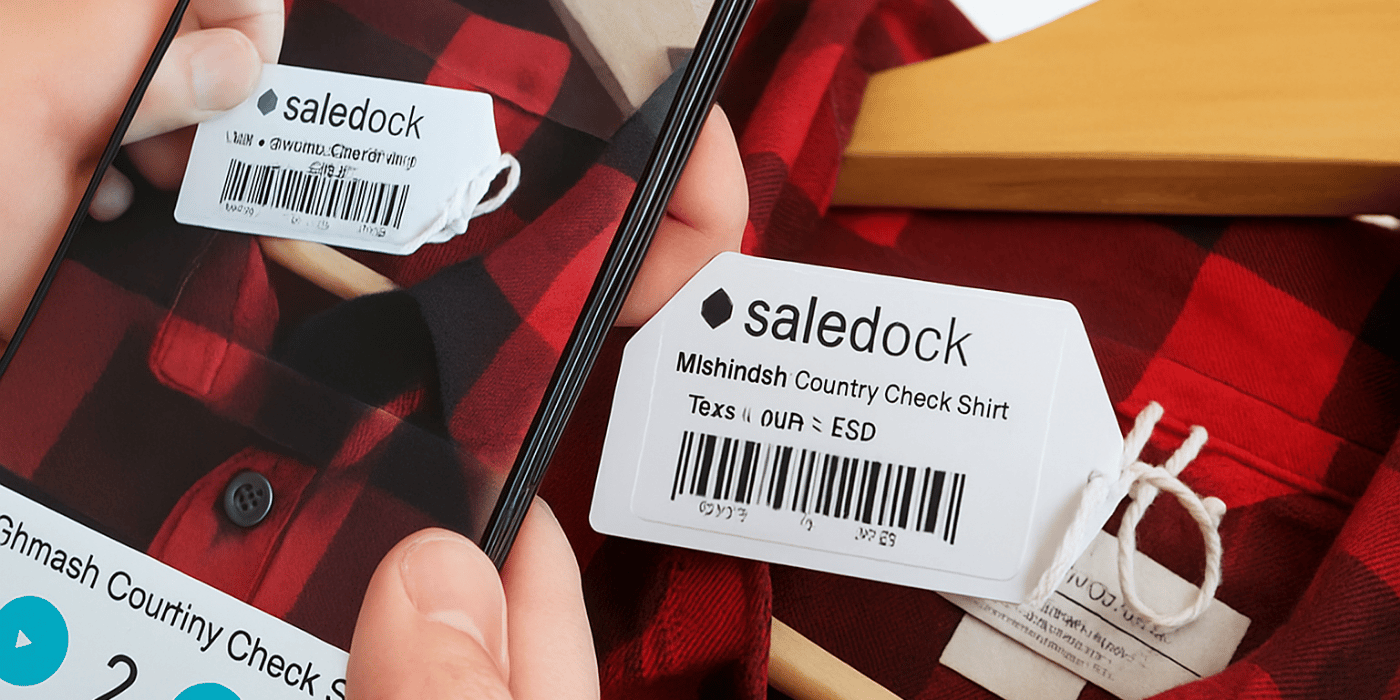
The most effective way to gain control over a massive inventory is through detailed variant tracking. Instead of seeing a single line for a product, you need to see every size, colour, and style as an individual unit. Saledock allows you to track at this granular level, which is essential when you are dealing with 10,000 or more SKUs. This level of detail ensures that your stock levels are always 100 percent accurate, whether an item is sold on your shop floor or through your website.
When your system understands these variations, it removes the need for constant manual checks. You no longer have to worry about whether you have a specific size in the back room because the data is right in front of you. This accuracy is the first step toward reducing the mental load of managing a high-volume shop, and it flows directly into how you handle your reordering.
Automating your stock alerts to stay ahead
Once you have your variants tracked, the next step is to ensure you never run out of your best-selling items. Manually checking the stock levels of thousands of products is an impossible task for any small team. This is where automated low-stock alerts become a vital part of your daily operation. You can set custom reorder points for every single SKU, and the system will notify you the moment a product needs your attention.
These alerts take the pressure off your shoulders and allow you to focus on the more creative parts of retail. Instead of spending hours scanning shelves or scrolling through reports, you can trust that your system is watching the numbers for you. This proactive approach ensures that your cash is not tied up in slow-moving items while your popular products remain consistently available for your customers.
Structuring your catalogue so it scales
When you are working with thousands of SKUs, how your catalogue is organised matters just as much as how it is tracked. A messy structure will slow down your team, increase errors, and make reporting harder than it needs to be.
Start by standardising your naming conventions across every product and variant. This means using consistent formats for sizes, colours, and product types so nothing gets duplicated or lost in translation. Clear category hierarchies also make a big difference. When products are grouped logically, your staff can find what they need quickly, and your reporting becomes far more useful.
It is also worth assigning SKUs in a way that carries meaning. A structured SKU system can tell you the product type, supplier, or variant at a glance. That might seem like a small detail, but when you are scanning hundreds of items a day, it adds up fast.
A clean catalogue is one of those things that quietly saves hours every week without anyone noticing.
Keeping your in-store and online stock aligned
Once your catalogue is clean and structured, the next step is making sure your physical stock reflects that same level of order. A well-organised system only works if what is on your shelves matches what is on screen.
Retail systems like Saledock remove the need for constant manual checks by keeping your inventory in sync automatically. Every sale, return, or adjustment is reflected across your shop floor and ecommerce store in real time, so your numbers stay aligned without the usual back and forth.
Having a unified system means your team sees the same data no matter where they are working. Store staff, warehouse operators, and online managers can all rely on the same up-to-date stock counts. This reduces errors, speeds up fulfilment, and ensures your customers get accurate availability information every time.
Ready to conquer the SKUs mountain? Start with Saledock
Every retail sector has its own version of the SKU mountain.
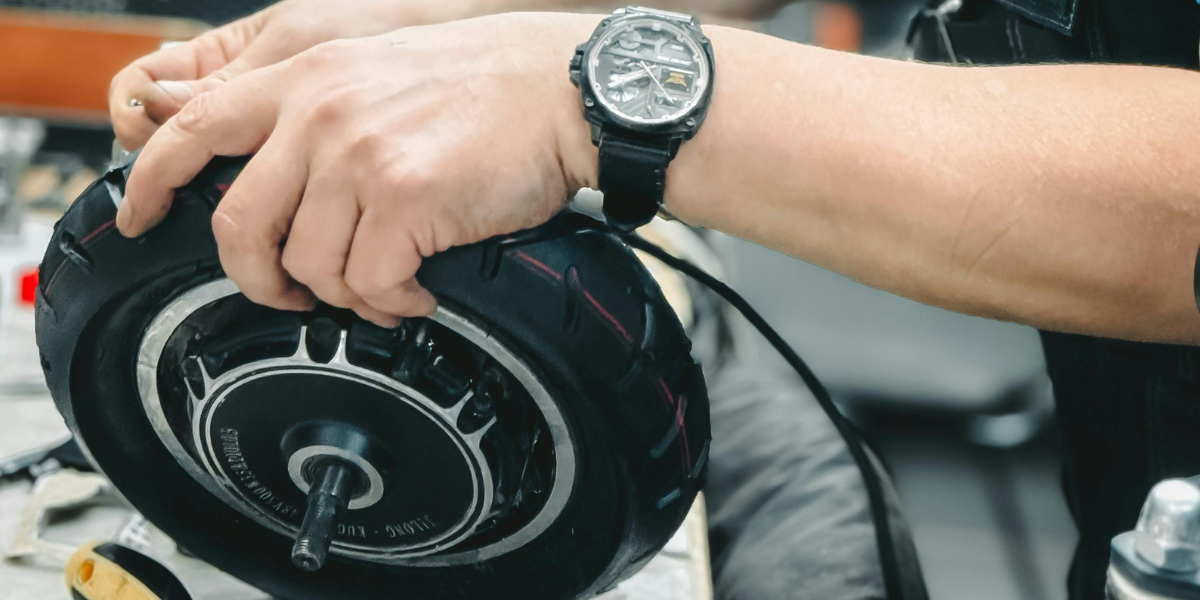
If you are in the angling industry, you might be balancing thousands of individual fishing lures where every slight change in weight or colour requires its own record. Similarly, bike shops often manage an enormous catalogue of complex components and tiny spare parts that are easy to lose track of without precise data. Even for mobility stores, where the items are much larger, the need for accuracy remains just as high to ensure that high-value stock is always accounted for.
Our team understands that every industry requires a system that understands its specific complexities rather than a generic one-size-fits-all approach. Saledock is built to handle these high volumes so you can focus on giving your customers the expert advice they expect.
If you are ready to stop fighting with your inventory and start using it to drive your growth, we are here to show you how.
Book a no-obligation demo with our team today.