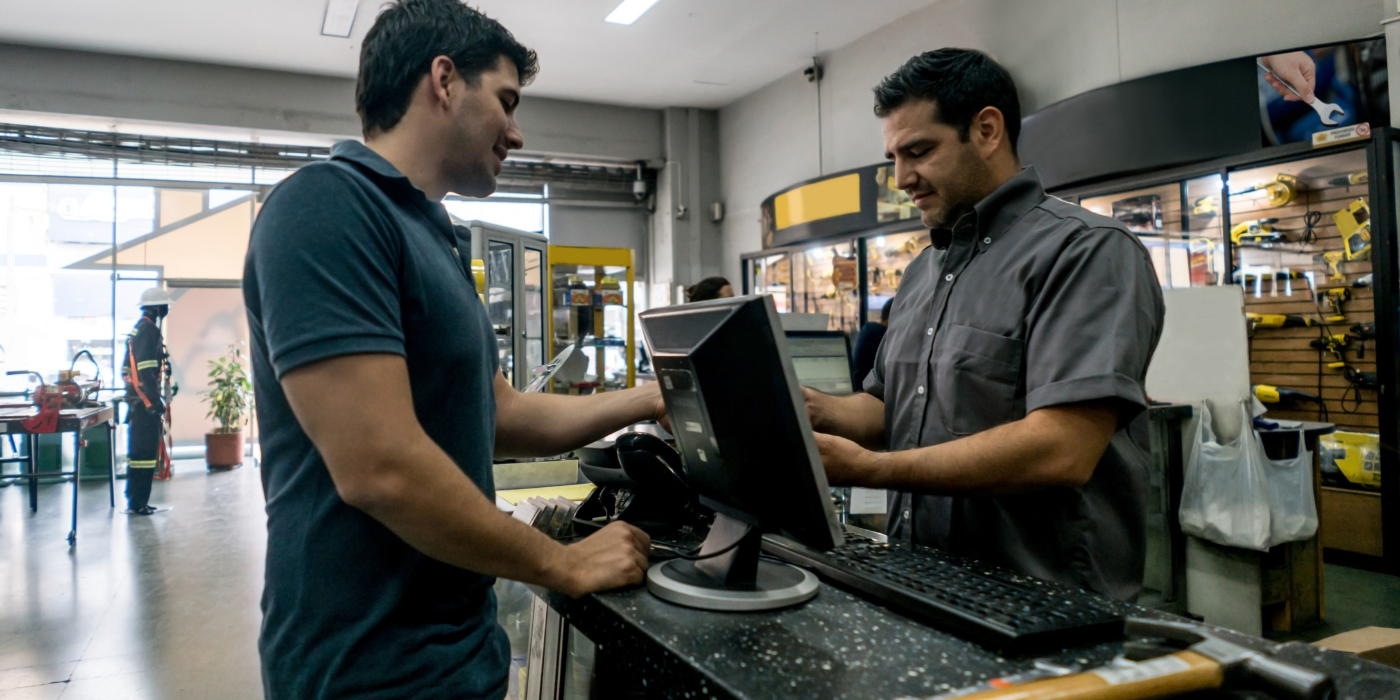
ePOS is the backbone of your retail operations, handling everything from transaction flows, real-time stock control, to unified customer profiles and revenue tracking. It plays a key role in determining whether your business grows or stagnates.
But how do you know that the ePOS in use is causing issues rather than driving efficiency? A basic POS leads to excessive manual work, incorrect statistics, scalability limitations and slow checkouts. If you face all or most of these issues, it's time to evaluate your current POS system and update it.
Here are seven telltale signs that clearly show why switching to a modern ePOS is the way forward.
1. Too much manual work and duplicate tasks
The clearest sign that your software is failing you is how much time your team spends on tasks that shouldn't really exist. If you find yourself updating a stock level on your website and then walking over to the till to do the same thing, you're essentially doing the work of the software yourself.
This kind of duplication is a massive drain on your energy and your accuracy.
Over time, this repetition creates a bottleneck in your day. When the shop gets busy, these manual updates are the first thing to be forgotten, which leads to ghost stock and frustrated customers. A more modern, unified system removes that friction by making sure information only needs to be entered once.
When everything is connected, a sale in person or an adjustment in the back office flows through the entire business automatically. It allows your team to stop acting like data entry clerks and get back to actually looking after the people walking through your door.
2. Fragmented inventory and data
As your business grows, keeping every channel aligned becomes more important than ever. If your in-store sales, website, and marketplaces like eBay or Amazon are not in sync, it becomes almost impossible to trust your own numbers. You end up with stock levels that do not quite match and pricing that starts to drift between different platforms. This leaves you second-guessing what is actually available in the stockroom, which is a stressful way to run a shop.
That lack of a single, reliable view creates friction across every part of your business. It is how orders get delayed, and customers end up frustrated when they buy something online that was actually sold in person an hour ago. A system that keeps everything connected in real time removes that uncertainty. It gives you a clearer, more honest picture of your business, so you can make decisions based on facts rather than a best guess.
3. Limited insights for informed decision-making
An outdated ePOS also offers basic reporting and cannot provide an accurate view of operational performance. This makes it difficult to make informed decisions on outdated or incomplete data. Your team may struggle to identify the best-selling products, analyse customer behaviour and track product performance across the multi-channel sales environment. Inaccurate data also leads to unreliable forecasting, which affects informed decision-making and your business growth in the long run.
An up-to-date ePOS system provides real-time retail analytics, offering a clear view of the entire business. The right insights help in informed decisions and streamline retail operations for consistent growth.
4. Slow checkouts and long queues
Customers demand quick and comfortable transactions as your business expands. A basic ePOS often struggles to keep up, resulting in a slow and irritable checkout experience, especially during rush hours. A recent study also shared that 28% of UK merchants lost billions in sales due to outdated POS solutions.
In many cases, the bottleneck is not just the software speed, but the lack of a proper link between your till and your card machine. Every time a member of staff has to manually type an amount into a terminal, they are adding seconds to the transaction and increasing the chance of a miskeyed figure. These errors then feed back into massive reconciliation issues when you are trying to cash up at the end of the day.
Related: If you are affected by the recent Epos Now and Dojo Integration changes. Read this blog.
A system that supports faster, integrated checkouts keeps the queue moving and ensures your data is accurate. Having the flexibility of mobile options or a fast, responsive interface means you can keep the shop floor humming even during your busiest sales events.
5. Challenges in scaling across multiple stores or channels
Multiple channels and stores need a unified system for managing stock, sales and customer data. A basic ePOS has a limited capacity and can’t scale as you open new stores and channels. This leads to inaccurate stock levels, unsynchronised sales channels and a lack of real understanding of day-to-day organisational activities due to manual work and repetitive tasks.
When your retail system is at capacity, adding a new register or a new branch doubles your workload instead of doubling your reach. A system that is designed to scale allows you to expand without adding layers of unnecessary complexity. It should be as simple as plugging in a new device and having all your existing products, customers, and reporting ready to go. Keeping everything connected as you grow means you can manage ten stores as easily as you manage one, giving you the freedom to focus on your expansion rather than the admin that comes with it
6. Unable to offer loyalty rewards or store credit to customers
The modern-day retail environment thrives on rewarding customers through gift cards, loyalty programmes and store credit. It becomes hard for a business to increase customer retention and satisfaction rates if these options are unavailable.
Instead of offering a limited customer experience, switching to a modern ePOS system will ensure a smooth and personalised buyer experience through gift cards, store credits and loyalty schemes under one platform.
7. Poor reliability and frequent technical issues
Regular technical issues and limited customer support also mean an outdated ePOS. System glitches and unexpected downtime disrupt daily operations, particularly during peak hours when every transaction matters. This results in missed sales opportunities, unsatisfied customers and unsupportive staff performance.
On the other hand, a modern system promises smooth performance, reducing downtime and providing prompt team support, allowing your employees to focus on delivering a reliable and high-quality customer experience.
So, where does that leave you?
If a few of these points feel familiar, it doesn’t necessarily mean everything needs to change overnight. But it does suggest that your current setup may no longer be the right fit for where your business is today.
Retail in the UK is continuing to evolve, and the systems behind it need to keep pace. The more your operations grow, the more important it becomes to have something that supports that growth rather than slowing it down.
Ready to move to a modern POS system that keeps up?
If you’re starting to feel the limitations of your current POS, it might be worth exploring what a more connected system could look like in practice.
Saledock brings together sales, stock, customer data, and reporting into one unified platform, helping retailers simplify day-to-day operations and stay in control as they grow.
If you’d like to see how it could work for your business, you can book a free, no-obligation demo with the team today.